
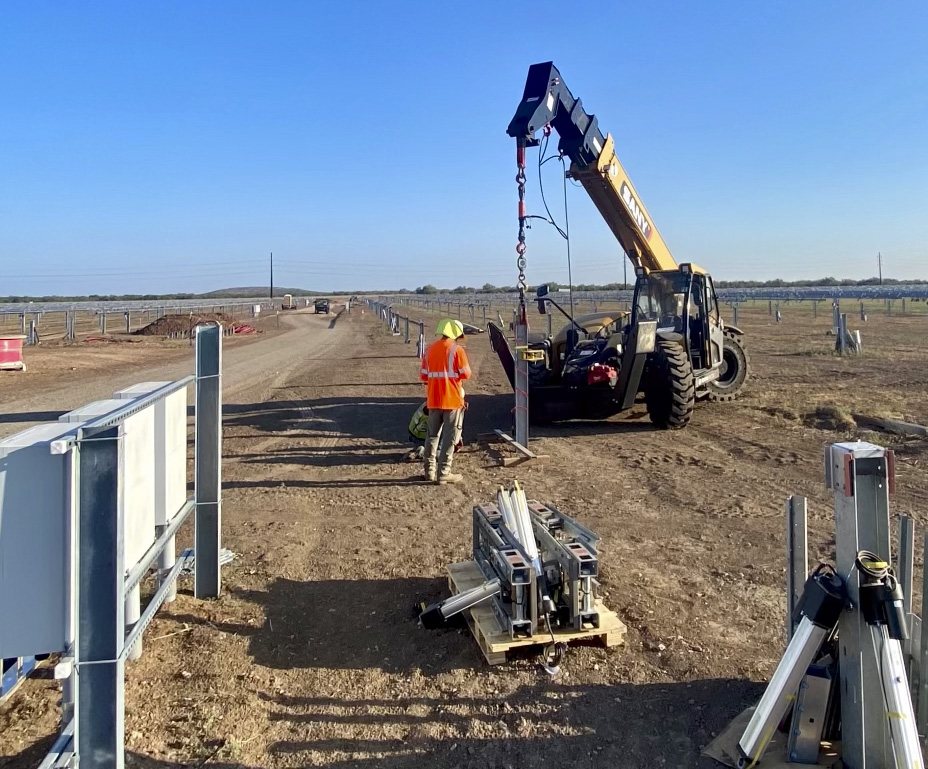
Production pile load testing. Documented proof that your installed piles meet design loads, reported straight to the Engineer of Record (EOR).
Production pile load testing checks a sample of installed piles against the proof loads in your project's QC program. It is the last step in the pile installation sequence, after design testing, drilling and driving.
On utility-scale solar sites, it's how EPCs, owners and engineers confirm that production piles, driven in the real ground, meet the design. XCEL runs uplift, lateral and compression tests as the program requires and delivers the results to the EOR and your QA team for close-out.
Over 20 GW of utility-scale solar pile load testing since 2018, on projects typically 100 MW to 600 MW. Major EPCs and leading tracker OEMs trust us on some of the country's largest utility-scale solar projects.
XCEL's multistate coverage includes Maine, New Hampshire, Vermont, New York, Pennsylvania, Ohio, Indiana, Illinois, Iowa, Missouri, Kentucky, Nebraska, Kansas, South Dakota, Texas, Oklahoma, Colorado, Wyoming and Idaho. Projects in other states are available. Contact XCEL to discuss your project location and requirements. Production testing follows the project's QC program, and the results go straight to the EOR. See the service area
Pre-construction tests run on a handful of test piles. Production can mean thousands of piles across changing ground, different crews and different equipment. Verification testing closes that gap.
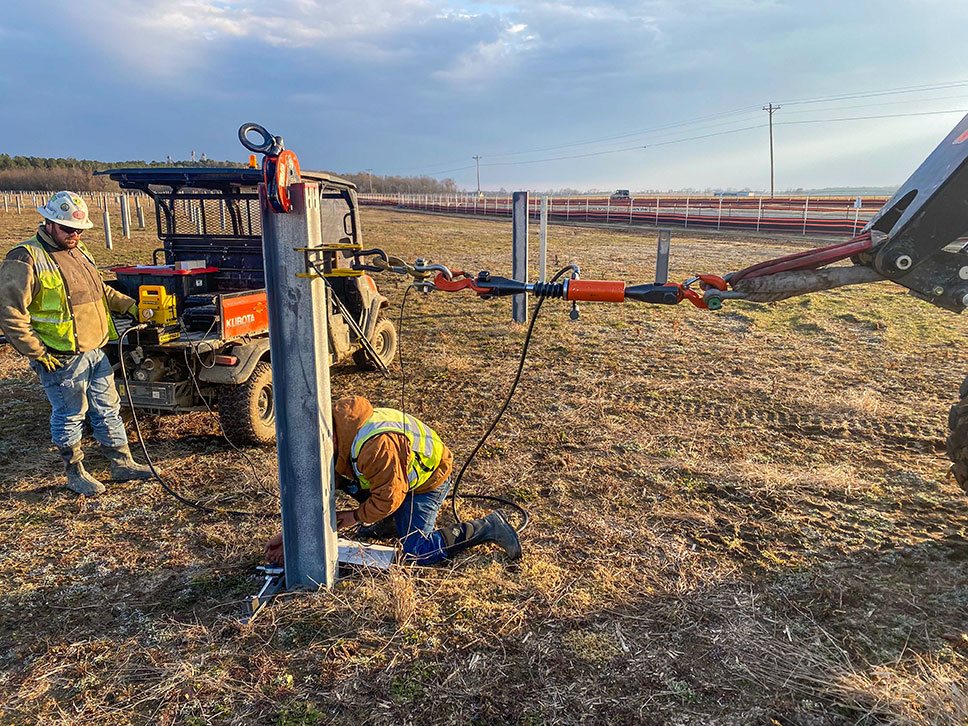
Pre-construction programs are often built around ASTM D3689 (tension), D3966 (lateral) and D1143 (compression). Production testing is usually defined by the engineer's or owner's QC program, which may draw on those standards and typically uses proof loads and shorter hold times. We follow the program the EOR specifies and test in general accordance with the referenced standards where the program calls for them.

Related: Pile Load Testing · Pre-Construction Testing · Pile Installation · Solar · Engineering Support
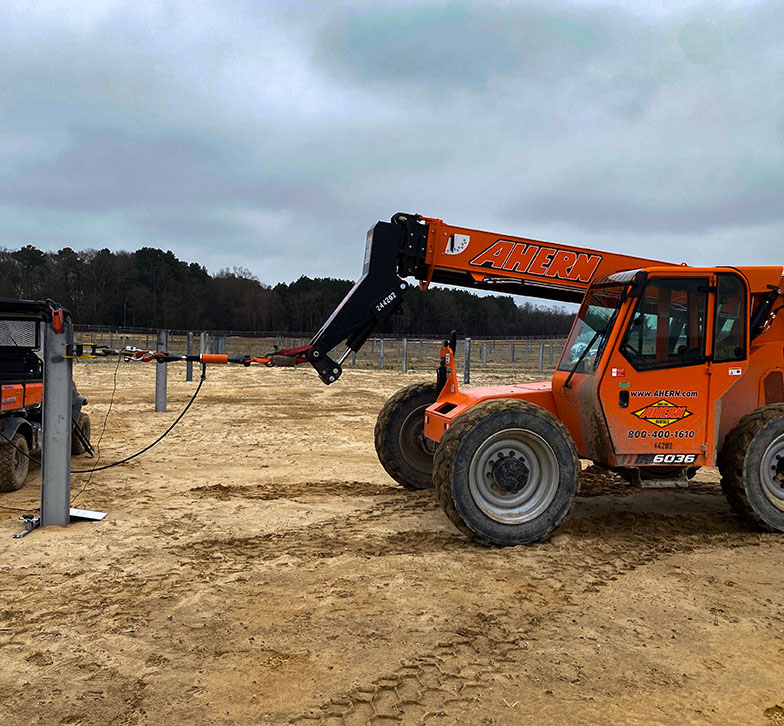
Testing on active solar sites means working near energized equipment, moving traffic and racking crews. Zero recordables since 2015. Every employee holds MSHA 48, OSHA 30 and CPR/First Aid, and 15 OSHA 510 holders are on staff.
Production pile load testing checks a sample of installed production piles against the proof loads in the project's QC program. It confirms that piles driven by the installer, in the real ground, meet the design. Results go to the Engineer of Record and your QA team, giving the owner and EPC documented proof for close-out.
Pre-construction tests use test piles to inform the design before it's final. Production tests verify the piles actually installed, usually with proof loads and shorter hold times set by the project engineer. Both are run in general accordance with the standards the Engineer of Record references, and both deliver field data to the EOR.
Test frequency is set by the engineer's or owner's QC program, often with extra attention on variable ground or remediated areas. We don't set the sample size; we staff to it. Send us the QC plan and pile count, and we'll match test crews and equipment to your program and schedule.
We flag it right away with its GNSS location so your engineer can direct the fix. If the engineer calls for it, we can re-drive, pre-drill or re-test, because we run our own pile drivers and Epiroc rigs. You get a clear record of the original test, the corrective action and the re-test.
Yes. We test production piles no matter who installed them. Independent testing gives the owner, EPC and Engineer of Record a second set of eyes on the installed piles. We follow the project's QC program, record each test with its location, and report results to the EOR and your QA team.
Field data sheets, photos and GNSS location records for every tested pile, organized for your QA close-out package. Any pile that doesn't meet the acceptance criteria is flagged immediately, with its location, so your team can act while crews are still on site. Data goes to the Engineer of Record in their format.
Send the QC plan and pile count. We respond to every quote request within 24 hours.