
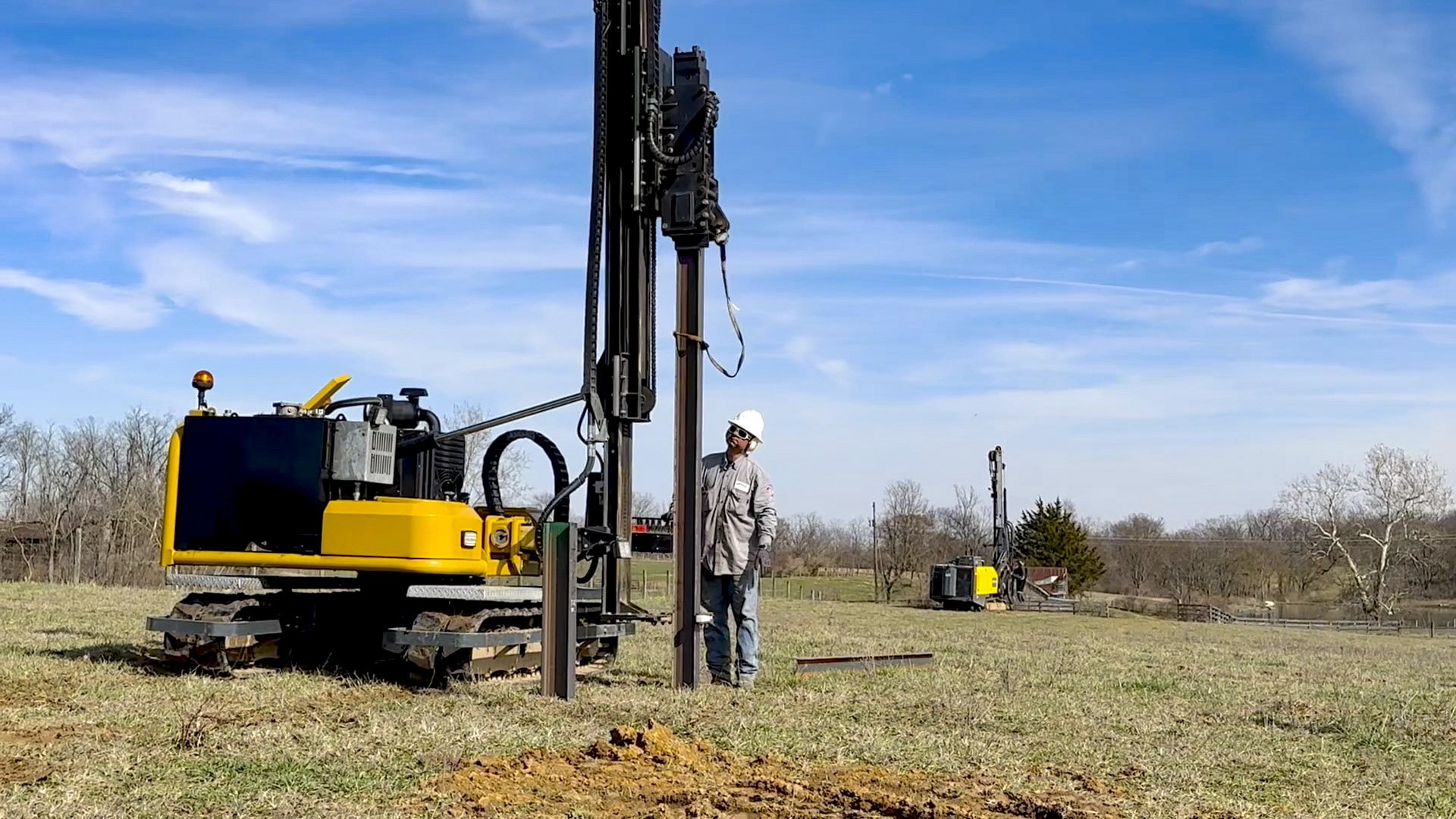
Pre-construction pile load testing. Real field data before the design is locked, so the Engineer of Record (EOR) can size piles with confidence.
Pre-construction pile load testing shows how a test pile actually performs in your ground before the pile design is final.
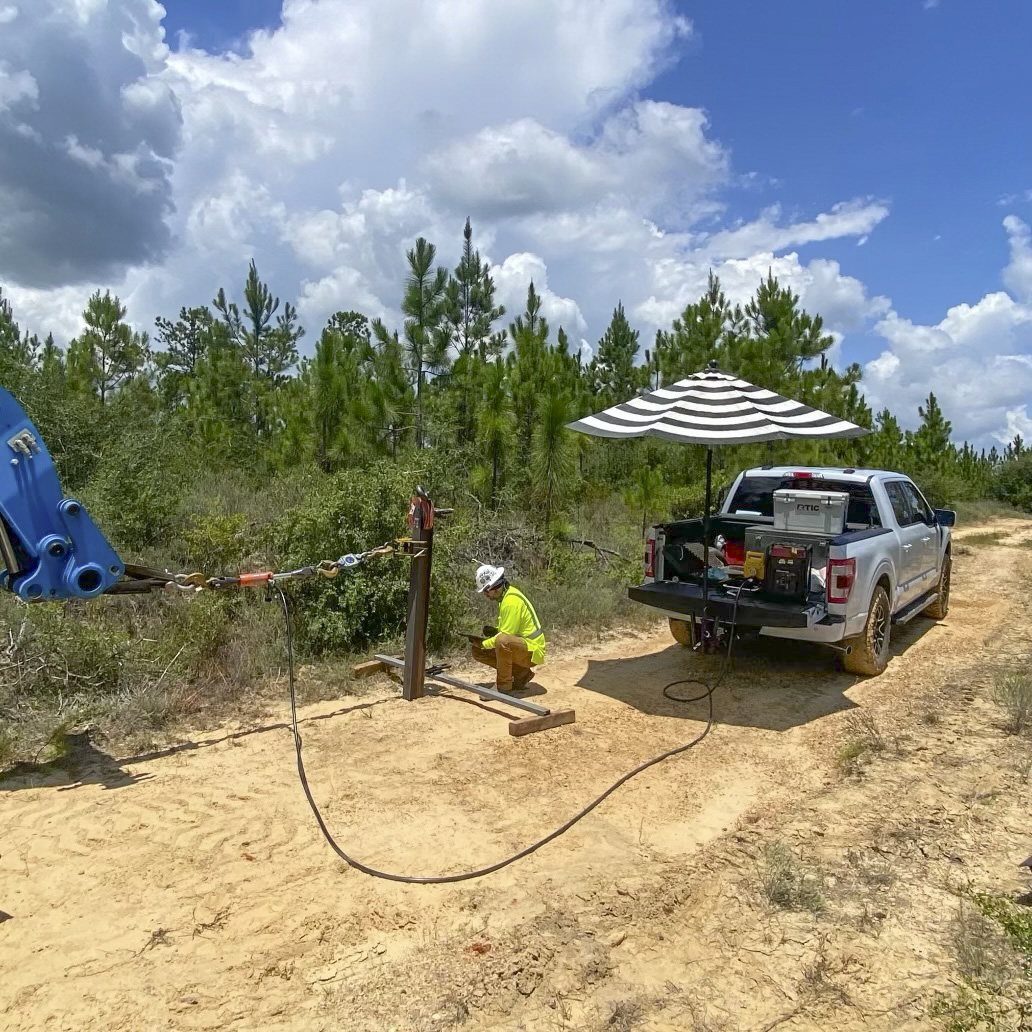
XCEL drives the test piles and runs axial tension (uplift), lateral and axial compression tests at the embedments in the test plan. The EOR gets clean field data and a test report, and uses them to optimize pile embedment and design across the site.
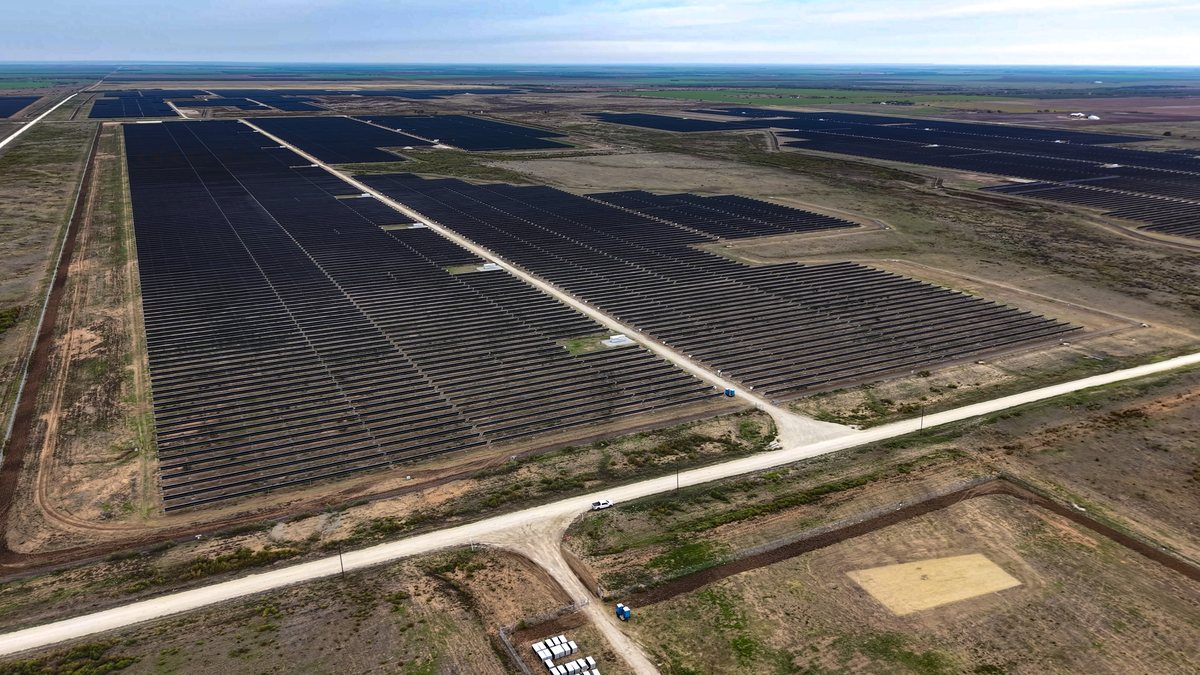
We test for engineering firms, tracker/racking OEMs and EPCs on fixed-tilt and single-axis tracker solar projects.
Over 20 GW of utility-scale solar pile load testing since 2018, on projects typically 100 MW to 600 MW. Major EPCs and leading tracker OEMs trust us on some of the country's largest utility-scale solar projects. That volume means our crews have already seen the soils, refusal conditions and test setups that slow other programs down.
XCEL's multistate coverage includes Maine, New Hampshire, Vermont, New York, Pennsylvania, Ohio, Indiana, Illinois, Iowa, Missouri, Kentucky, Nebraska, Kansas, South Dakota, Texas, Oklahoma, Colorado, Wyoming and Idaho. Projects in other states are available. Contact XCEL to discuss your project location and requirements. When test piles hit rock or refusal, our own rigs pre-drill the test locations and the program stays on schedule. See the service area
test piles installed and tested to your program
pile design support for single-axis tracker and fixed-tilt systems
test programs scheduled ahead of procurement and mobilization
Whoever hires us, the data goes where it's needed: to the Engineer of Record.
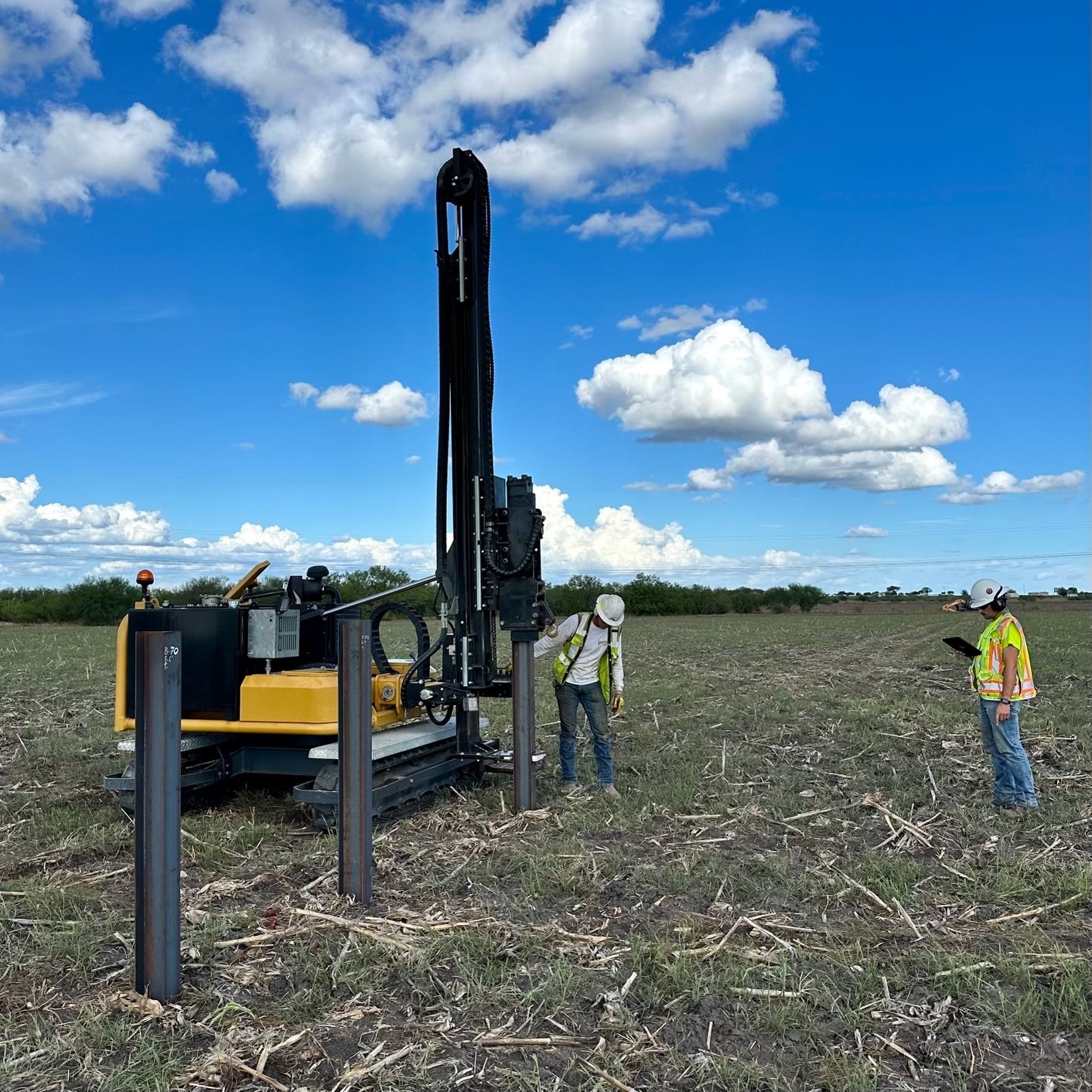
A geotechnical report gives you borings. A pile load test tells you how the pile you plan to use behaves at the embedment you plan to drive it. That difference can change embedment and pile design across thousands of piles.
confirm or reduce design embedment, zone by zone
check whether the planned pile design can be optimized
test to the uplift and lateral demands of the actual racking system
find refusal areas where pre-drilling may be needed
find weak or variable ground before production crews do
The EOR interprets the results and sets the design. Our job is data they can trust.
We run all three standard test types, in general accordance with the ASTM standards and procedures the EOR specifies.
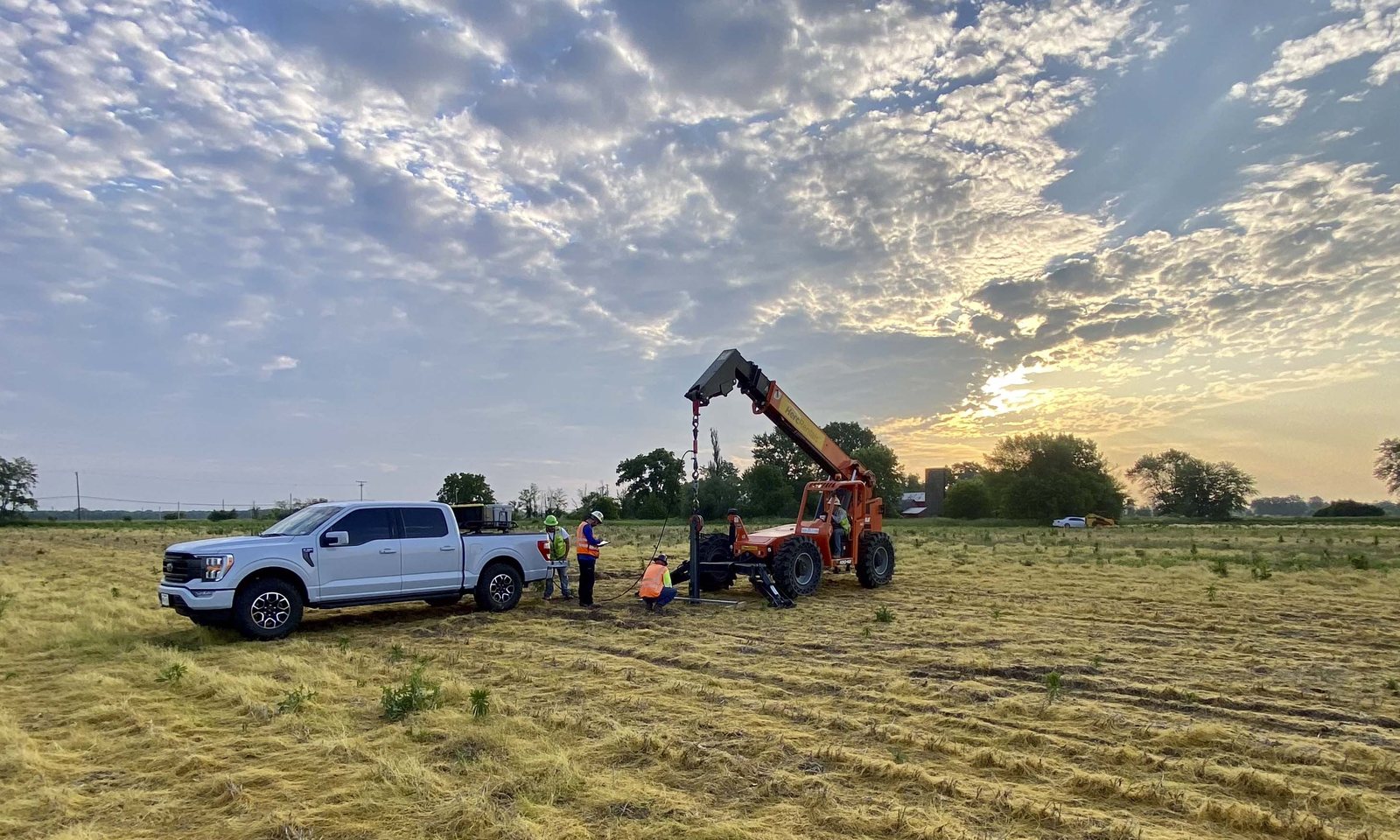
The pile is pulled upward in load increments while movement is measured. On solar projects, wind uplift often governs the design, so tension tests usually anchor the program. In general accordance with ASTM D3689.
A horizontal load is applied at a set height above grade, the way wind and tracker loads push on a post, and deflection is measured at each step. In general accordance with ASTM D3966.
A downward load is applied and settlement is measured. Compression rarely controls solar array design. In general accordance with ASTM D1143.
Related: Pile Load Testing · Production QC Testing · Pile Installation · Rock Drilling · Solar · Engineering Support
Load testing means stored energy, heavy equipment and people working close together. Every employee holds MSHA 48, OSHA 30 and CPR/First Aid, 15 team members hold OSHA 510, and we've kept zero recordables and a TRIR of 0 since 2015.
A pile load test applies a measured load to an installed pile and records how far it moves. Pre-construction tests are run on test piles before the design is final. The results show how the pile and soil work together, so the Engineer of Record can set embedment depth and pile design with real field data instead of assumptions.
We run axial tension (uplift), lateral and axial compression tests. Most solar programs focus on uplift and lateral, because wind uplift and lateral loads usually govern the design. Compression is added where the design calls for it. The Engineer of Record sets the program, and we run it in general accordance with the ASTM standards they specify.
Yes. We test piles for both fixed-tilt racking and single-axis trackers, for engineering firms, tracker/racking OEMs and EPCs. Each program is set up to the uplift and lateral demands of the actual racking system, and the field data goes to the Engineer of Record, who uses it to set embedment and pile design.
It depends on site size, soil variability and the engineer's program. Larger sites with more variable ground usually need more test locations so each zone is covered. The Engineer of Record sets the count and locations. Send us the test plan and we'll price and staff the program to match it.
Yes. We drive the test piles with our own pile drivers and pre-drill with our own Epiroc rigs wherever we hit refusal, then run the tests. One crew handles layout, installation and testing, so there are no handoffs between subcontractors and the test program stays on the schedule your design team needs.
We test in general accordance with the standards your engineer specifies, typically ASTM D3689 for axial tension (uplift), ASTM D3966 for lateral and ASTM D1143 for axial compression. Load increments, hold times and acceptance criteria follow the Engineer of Record's test plan, and the field data is recorded to match it.
No. We deliver the field data and test report to the Engineer of Record. Interpretation and pile design stay with the EOR and their licensed professionals. Our job is to install the piles, run the tests to the plan and hand over clean, complete, consistent data they can design from with confidence.
XCEL provides multistate coverage in Maine, New Hampshire, Vermont, New York, Pennsylvania, Ohio, Indiana, Illinois, Iowa, Missouri, Kentucky, Nebraska, Kansas, South Dakota, Texas, Oklahoma, Colorado, Wyoming and Idaho. Projects in other states are available. Contact XCEL to discuss your project location and requirements. We coordinate rapid mobilization to the job. Tell us where your project is and when you need testing, and we'll respond within 24 hours.
Send the test plan and site location. We respond to every quote request within 24 hours.