
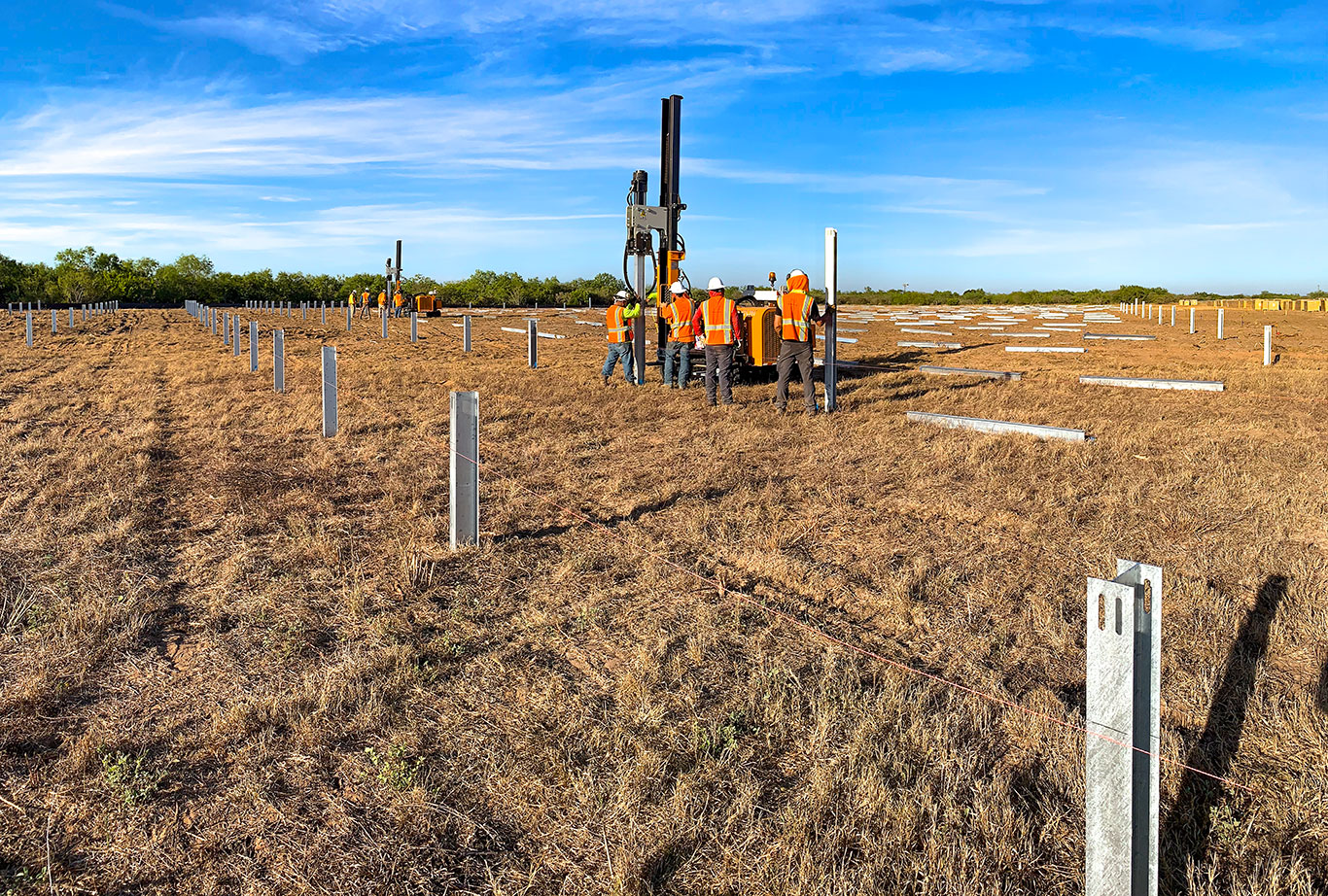
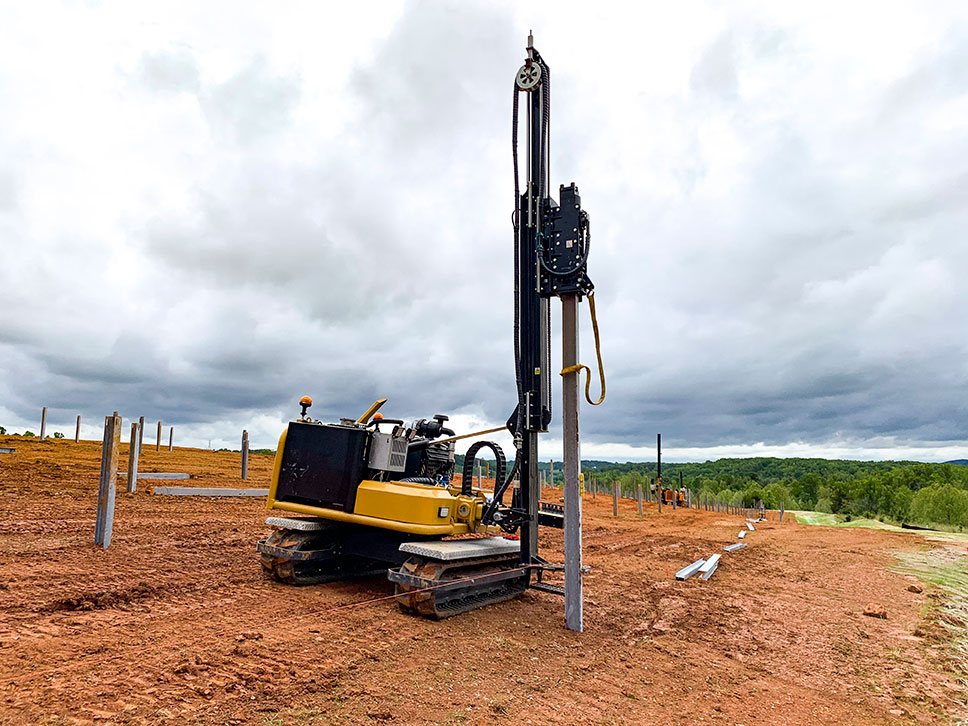
Pile installation for utility-scale solar. Piles installed to the design and the tracker or racking specs, with our own rigs ready to pre-drill when piles hit refusal.
XCEL is a pile installation contractor for utility-scale solar projects. We install piles for single-axis tracker and fixed-tilt systems to the embedment, reveal, plumb and location your drawings and your tracker or racking OEM specify.
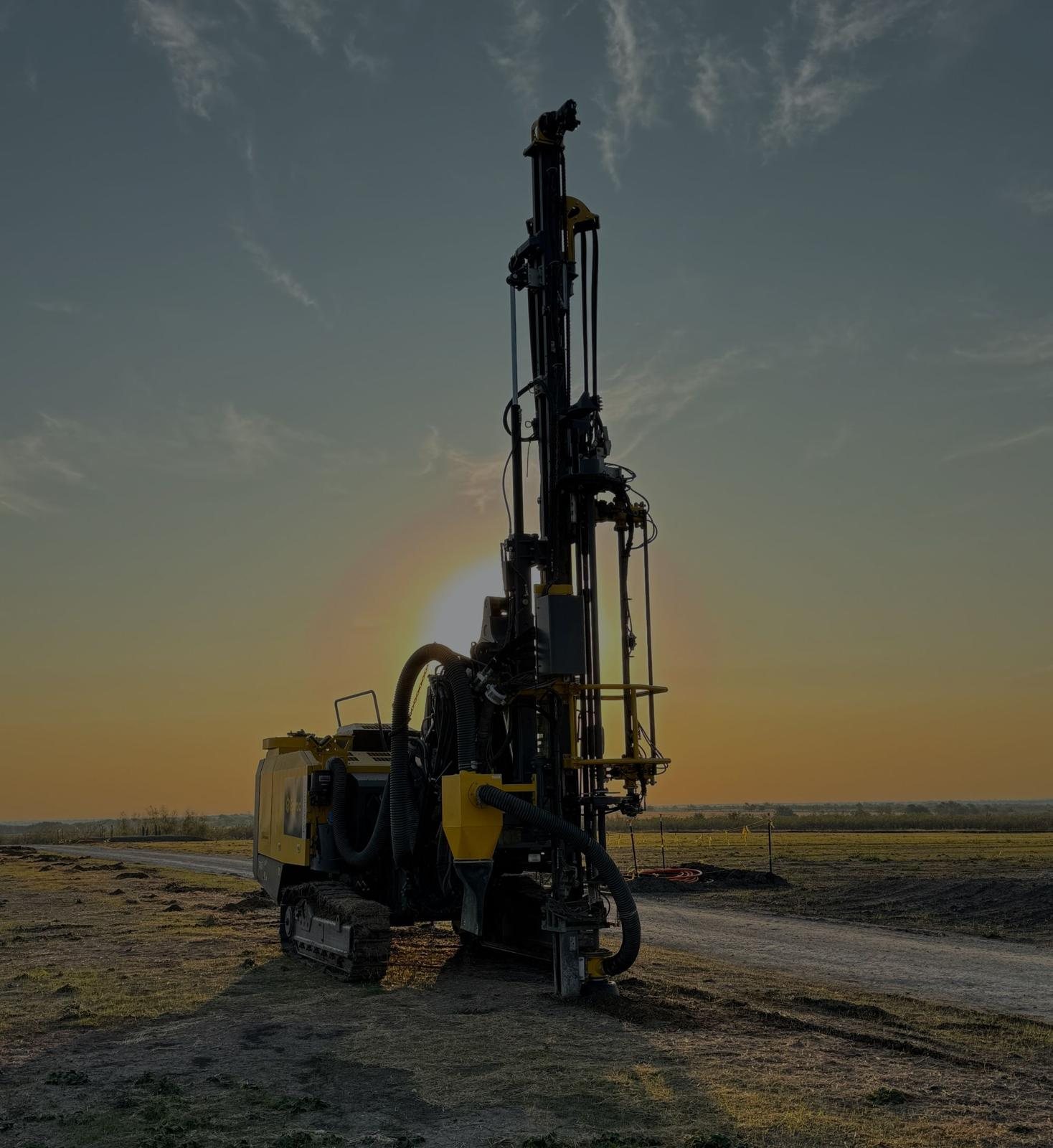
Our crews lay out every pile with Topcon GNSS RTK. And because we run our own Epiroc drill fleet, refusal doesn't stop the pile line: we drill ahead of the pile and keep installing.
A utility-scale solar site can have tens of thousands of piles, with the racking crew right behind you. Every pile has to land in the right spot, at the right height, in line with its neighbors, inside the tolerances the tracker or racking manufacturer allows. Miss them and it shows up later as bent hardware, slow racking, re-drives and costly remediation. We run pile installation as a production job and a quality job at the same time.
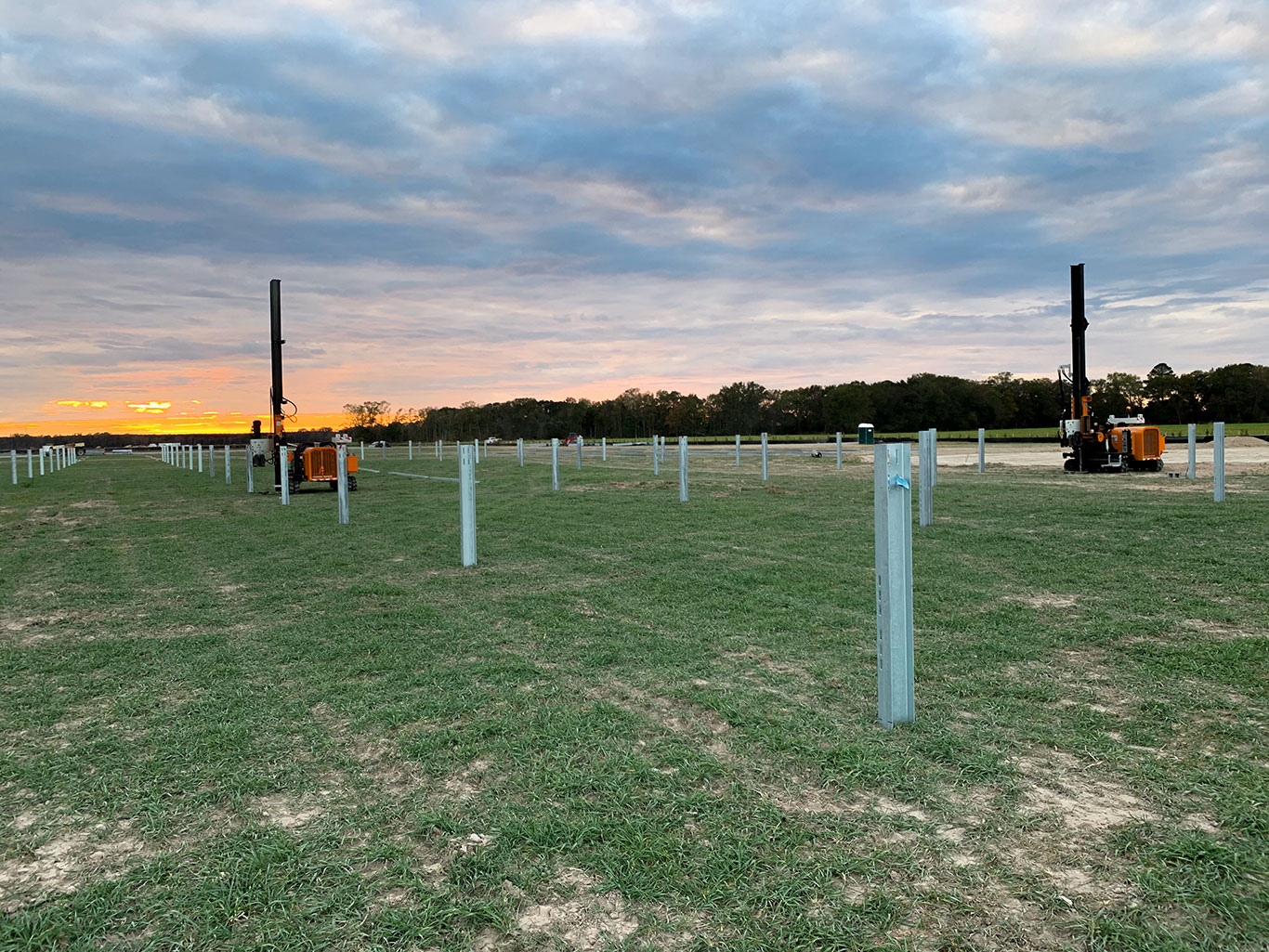
Piles for single-axis tracker and fixed-tilt systems, installed to design embedment and reveal and checked against the OEM's tolerances.
We install test piles for pre-construction load test programs, so your engineer gets results from piles installed the way production piles will be. Pre-Construction Testing
Tracker and racking manufacturers publish installation tolerances for pile location, reveal (top-of-pile height), plumb and rotation. The project adds its own embedment requirements. We set up every job around those numbers:
staked and checked with GNSS RTK against the EPC stake map
top-of-pile height held to the specified range
checked during driving, corrected before the driver moves on
driven to design depth, with refusals marked and reported
installation data your QA team and the OEM can review
We're a trusted specialty subcontractor to top-tier utility-scale solar EPCs, general contractors, engineering firms and tracker/racking OEMs. We know what each of them needs to see at turnover.
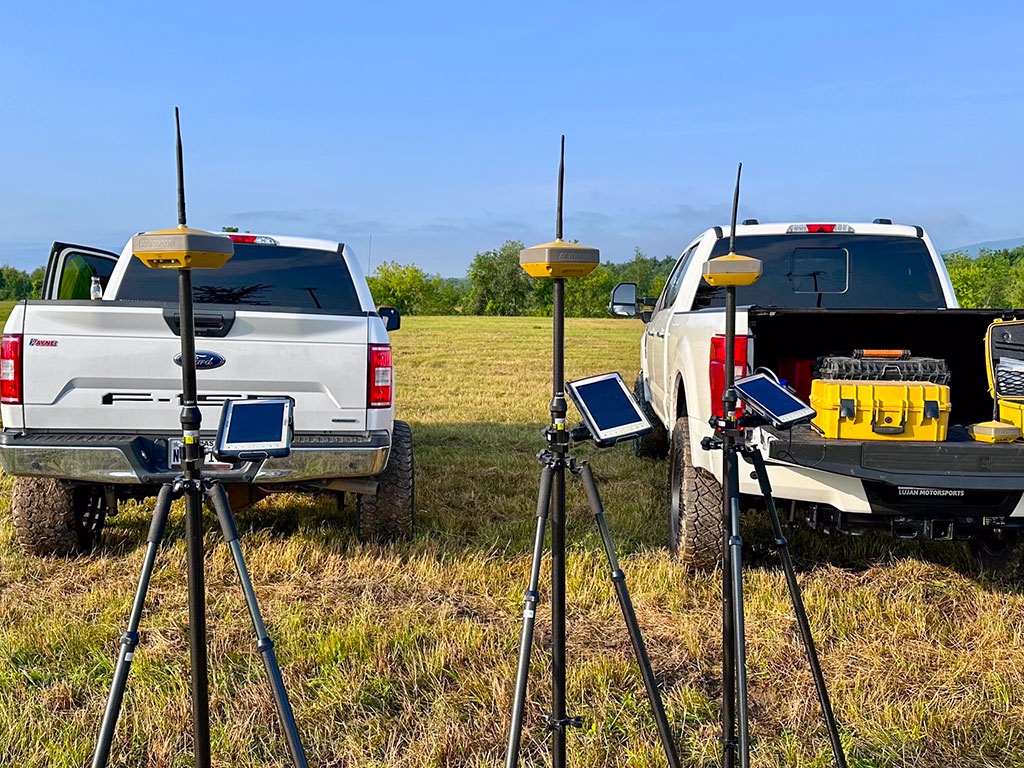
Our crews run Topcon GNSS receivers in RTK mode with UHF radio corrections, so layout works on remote sites without cell coverage. Piles are staked ahead of the drivers, and as-built positions can be checked against tolerance before racking starts.
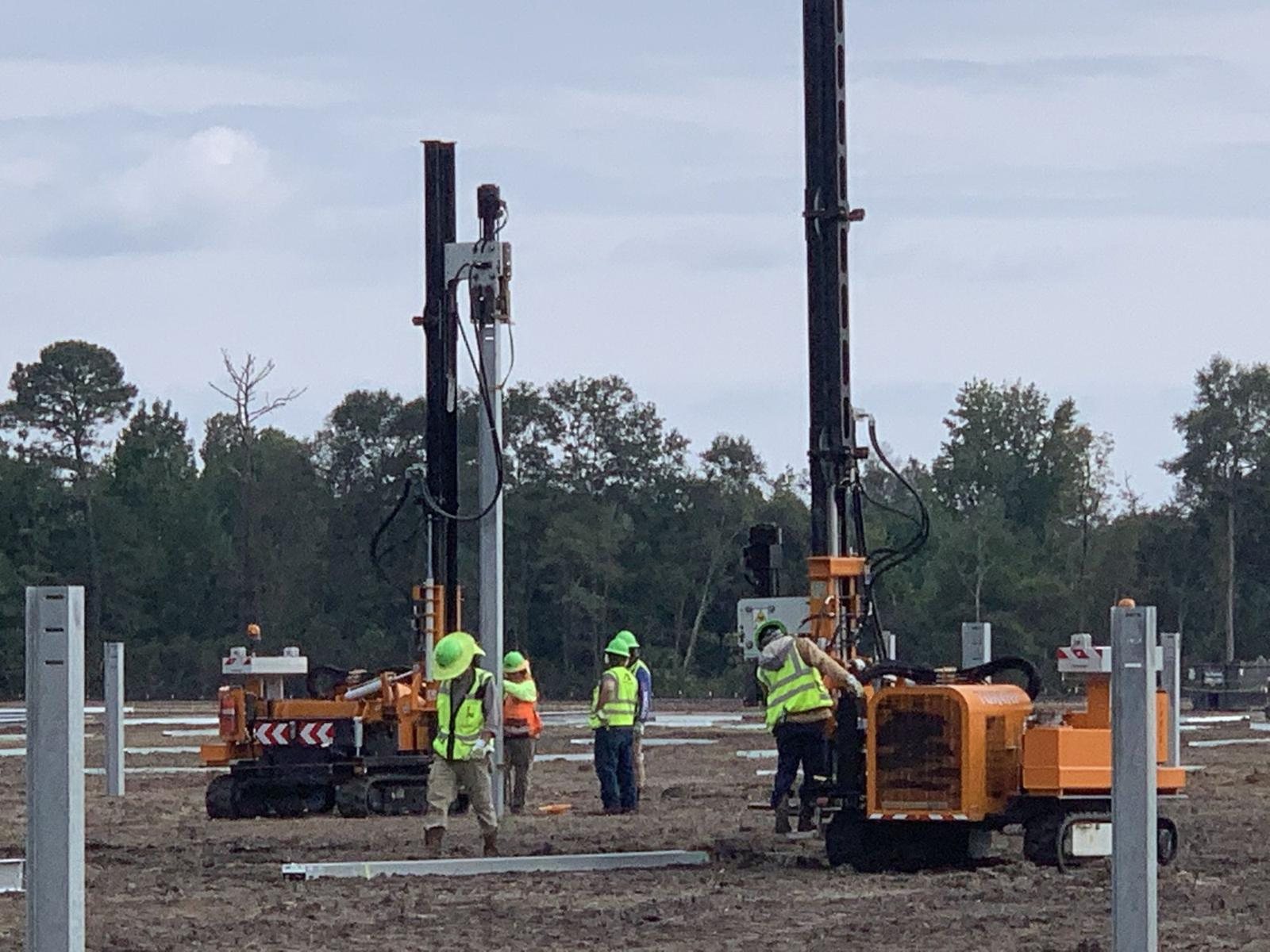
Rock, caliche, cobbles and dense layers can stop a pile short of embedment. Every hour the pile line waits costs money. Here's how we handle it:
Drilling and driving from one subcontractor means one schedule, one point of contact and no waiting on a second sub to mobilize. We also drill for pile remediation and corrective work on solar projects, to the plan your engineer approves. Rock Drilling
Production depends on soil, pile length, embedment, refusal frequency and site logistics, so we don't quote a one-size number. We size the spread to your schedule instead: pile drivers, material handling, GPS layout and pre-drill rigs to hit your weekly targets, with daily production reports so you always know where the job stands. When the schedule tightens, we add equipment.
Related: Solar · Pile Load Testing · Pre-Construction Testing · Production QC Testing · Request a Quote
Pile installation puts equipment, material and people in close quarters. Zero recordables and TRIR 0 since 2015 come from daily planning, trained operators and stop-work authority for everyone on the crew. Every employee holds MSHA 48, OSHA 30 and CPR/First Aid, and 15 team members hold OSHA 510.
Utility-scale solar, both single-axis tracker and fixed-tilt systems, for EPCs and tracker/racking OEMs. We install to the design embedment and reveal, then check location, plumb and rotation against the project's tolerances before the driver moves on. Every pile gets GNSS layout and an installation record.
We mark and document the location with GNSS, report it the same day and coordinate with your engineer on the approved method. Then our own Epiroc rigs pre-drill the location so the pile can reach embedment. No waiting on a second subcontractor to mobilize, and the pile line keeps moving.
We stake every pile with Topcon GNSS RTK against the EPC stake map, then check reveal, plumb and rotation during driving and correct before the driver moves on. Installation data is recorded for your QA team and the OEM, so turnover is clean and racking crews can release rows without rework.
It depends on soil, pile length, embedment, refusal frequency and site logistics, so we don't quote a one-size number. We size the spread to your schedule (pile drivers, material handling, GPS layout and pre-drill rigs) and report production daily. When the schedule tightens, we add equipment to hold your weekly targets.
Yes. Our crews lay out pile locations with Topcon GNSS receivers in RTK mode, with corrections sent over UHF radio, so layout works on remote sites without cell coverage. We work from the EPC's project control, stake ahead of the drivers and can check as-built positions against tolerance before racking starts.
Yes. We run pre-construction load tests on test piles before design is final and production QC load tests on installed piles. Tests are performed in general accordance with ASTM D3689, D3966 and D1143, as the Engineer of Record specifies. We've supported 20+ GW of utility-scale solar pile load testing.
Send the pile plan and schedule. We respond to every quote request within 24 hours.